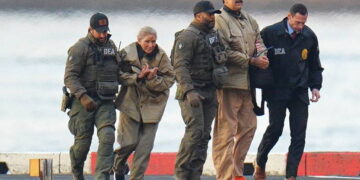


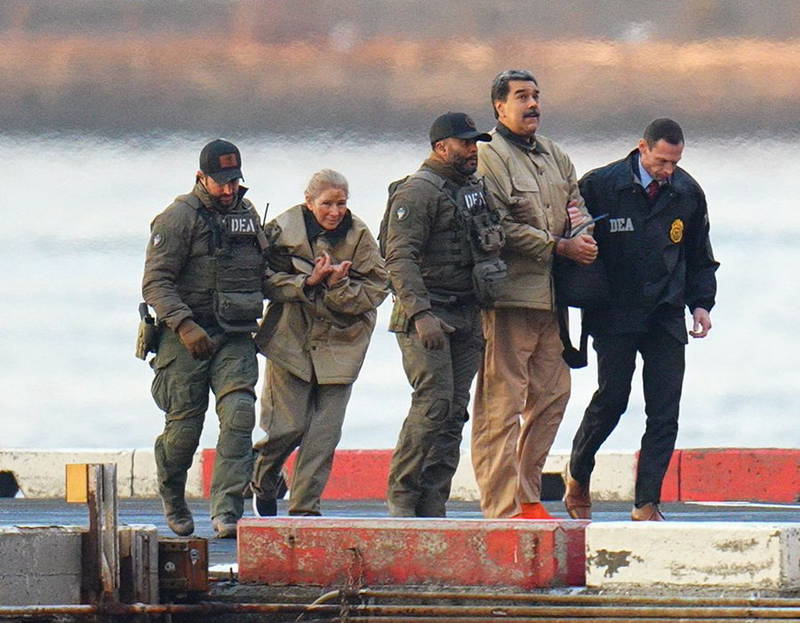
As international condemnation mounts over the reported United States invasion of Venezuela and the capture of President Nicolás Maduro, Nigerian foreign policy experts have raised alarm over what they describe as a dangerous return to imperial power politics.
Scholars and diplomats warned that the action, attributed to the administration of President Donald Trump, threatens global stability and undermines international law, with troubling implications for weaker states, including those in Africa.
The concerns were aired on Tuesday at a special roundtable organised by the Nigerian Institute of International Affairs (NIIA), titled “Matters Arising from US Interventions in Venezuela.”
Participants included the Director-General of NIIA, Prof. Eghosa Osaghae; former Foreign Affairs Minister and NIIA Chairman, Prof. Bolaji Akinyemi; political scientist Prof. Adele Jinadu; and former ECOWAS Director of Political Affairs, Ambassador Remi Ajibewa.
Others were Ambassador Joe Keshi, former Permanent Secretary at the Ministry of Foreign Affairs; Prof. Femi Otubanjo of NIIA; Dr. Rita Agu of NIIA; and international affairs analysts Femi Ojumu, Kayode Komolafe and Magnus Onyibe.
Fears of renewed imperialism
The experts criticised what they described as an endorsement of the “might is right” doctrine, warning that the action could embolden other global powers such as China, Russia and North Korea to act unilaterally.
They stressed that respect for sovereignty, territorial integrity and non-interference remains central to global order and stability.
At the same time, the panel agreed that the development offers lessons for African states on the importance of good governance, internal stability and citizen welfare as foundations for national sovereignty.
‘We are all endangered’ — Osaghae
Leading the discussion, Prof. Osaghae questioned whether the US action represents a new phase of imperialism, warning that countries in the Global South are increasingly vulnerable.
He dismissed arguments that Africa’s geographical distance shields it from similar interventions.
“What is happening is sending shockwaves across the world,” Osaghae said. “People are asking whether this is a new form of imperialism. Geography does not protect anyone anymore.”
Trump undermining world order — Keshi
Ambassador Joe Keshi criticised what he called the US’s double standards, noting that Washington now violates international rules it helped establish.
He argued that unchecked power has bred impunity, urging countries to strengthen their internal capacities rather than rely on external protection.
“Nobody can stop the United States today unless countries quietly but deliberately build collective capacity to deter such actions,” Keshi said.
‘Arrogance of power’ — Jinadu
Prof. Adele Jinadu described the development as an expression of raw power, calling on Third World countries to strengthen solidarity.
He advocated the creation of a neutral bloc and deeper cooperation among emerging economies through platforms such as BRICS to counterbalance dominant powers.
Collapse of rational policy — Otubanjo
Prof. Femi Otubanjo argued that US foreign policy under Trump has become erratic and driven largely by domestic political considerations.
He pointed to Venezuela’s vast oil reserves as a key factor shaping Washington’s actions.
Dangerous precedent for international law — Ojumu
International policy expert Femi Ojumu warned that the intervention violates international law and weakens global norms.
He cited past US actions in Iraq, Yemen and Somalia as evidence of a pattern of unilateralism.
Ojumu called for reforms of the United Nations Security Council and a renewed commitment to multilateralism and transparent global leadership.
Resource control at the core — Komolafe
Kayode Komolafe said the incident reflects the logic of capitalism and imperial expansion, driven by the pursuit of resources with little regard for consequences.
He warned that global stability could unravel if powerful nations increasingly act outside established legal frameworks.
Legal implications
On the legal dimension, Dr. Rita Agu of NIIA described the arrest of a sitting president by a foreign power as unlawful.
She said lasting solutions must rest on strict adherence to the UN Charter, respect for sovereign immunity and peaceful dispute resolution.
From my experience tracking international interventions and policy shifts using conflict-mapping tools and international law frameworks, such actions often reshape global norms long after the immediate crisis fades. The consensus at the roundtable was clear: the Venezuela episode may redefine how power is exercised — and resisted — in the evolving world order.